
 |
 |
 |

|

On this page
Opiates and
love
Cocaine and
fight
Amphetamines
and flight
Nicotine and
food
Benzodiazepines
and sleep
Where in the
brain
Emotions
Decisioncenter
Pain
Learning
Reward
Behaviour
Training
Genes
Stress
Short term
effects
Long term
effects
Effects
between systems
Age and sex
- Addictive drugs as neurotransmitters
- Addictive drugs and the brain
- Addictive drugs and drives
- What is addiction?
- The development of emotional systems
Are drugs neurotransmitters? In which brainstructures?
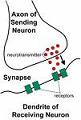 Between 1975
and 1980 the first messages came in telling that the brain makes its own
drugs. This raised questions like whether drugs are
neurotransmitters (connective substances in the nervesystem) and
what the function is of the brain structures in which the drugs play this
role. On this website I contain myself to the most important substances
that are known to be addictive. These belong to 5 groups: opiates (heroin, opium, morfine, methadone),
cocaine, amphetamines, nicotine en benzodiazepines. Alcohol is a complex
substance, which probably combines the action of other drugs. Are these drugs neurotransmitters?
There is a short way to a yes answer to this question.
It is well-known that these drugs have actions in the
decisioncenter of the brain. This center regulates sex, food and other
basic drives (systems for the survival of the species and the individual).
So there are two possibilities. They have action besíde these
normal processes which are regulated in this center or they have action withín the
structures of these basic drives. When the last is the case, they will
influence behaviour that is connected with these drives. By observing
longerterm actions of these drugs (besides the withdrawal symptoms),
especially what happens when one stops the use, it is shown that they
influence important existing systems. So they work as neurotransmitter
ín these structures.
Between 1975
and 1980 the first messages came in telling that the brain makes its own
drugs. This raised questions like whether drugs are
neurotransmitters (connective substances in the nervesystem) and
what the function is of the brain structures in which the drugs play this
role. On this website I contain myself to the most important substances
that are known to be addictive. These belong to 5 groups: opiates (heroin, opium, morfine, methadone),
cocaine, amphetamines, nicotine en benzodiazepines. Alcohol is a complex
substance, which probably combines the action of other drugs. Are these drugs neurotransmitters?
There is a short way to a yes answer to this question.
It is well-known that these drugs have actions in the
decisioncenter of the brain. This center regulates sex, food and other
basic drives (systems for the survival of the species and the individual).
So there are two possibilities. They have action besíde these
normal processes which are regulated in this center or they have action withín the
structures of these basic drives. When the last is the case, they will
influence behaviour that is connected with these drives. By observing
longerterm actions of these drugs (besides the withdrawal symptoms),
especially what happens when one stops the use, it is shown that they
influence important existing systems. So they work as neurotransmitter
ín these structures.
|
Drug |
long
term effect |
drivesystems |
|
Opiates |
impotency
which recovers after stop using |
procreation |
|
Nicotine |
propensity
to gain weight after stop using |
food |
|
Cocaine |
getting
aggressive after stop using |
fight |
|
Amphetamines |
loosing
muscles |
flight |
|
Benzodiazepines |
influence
on sleeping behaviour |
sleep |
In my analysis I followed a longer pathway by putting together many different 'hard' data about the effects of drugs and fitting those in a model. These data for the opiates with references to the relevant research are to be found in M. Brandes: An explanatory model for opiate addiction. This longer way brought a lot of information about the process of addiction and by this about the way the brain works.
backWhat do drugs teach about the brain?
 Drugs have
actions in the oldest parts of the brain (the olfactory brain), the
reptile brain and the limbic system, brainregions we share with
animals. The center for the ‘drive-systems’. One does also speak about the
motivational system, because from here behaviour is directed. Much is
still unknown about the processes in these brain regions. It is called the
'black box' by psychologists. Because addictive drugs so to say 'hijack' these systems, is it possible to study these
processes in a more simple form then in the normal complexity of life. Addictive drugs
activate coupled processes like learning, endocrinal and behavioral systems,
that start from these deep innerbrainregions. The processes fit in continuous patterns
with longterm (for years or lifelong) influence, possibly even verylong influence (on progeny).
Drugs have
actions in the oldest parts of the brain (the olfactory brain), the
reptile brain and the limbic system, brainregions we share with
animals. The center for the ‘drive-systems’. One does also speak about the
motivational system, because from here behaviour is directed. Much is
still unknown about the processes in these brain regions. It is called the
'black box' by psychologists. Because addictive drugs so to say 'hijack' these systems, is it possible to study these
processes in a more simple form then in the normal complexity of life. Addictive drugs
activate coupled processes like learning, endocrinal and behavioral systems,
that start from these deep innerbrainregions. The processes fit in continuous patterns
with longterm (for years or lifelong) influence, possibly even verylong influence (on progeny).
back
Different addictive drugs in different drives
The processes show resemblances and differences between the addictive drugs. For example in the kind of withdrawal symptoms and the measure of learning which takes place. What is the neurobiological meaning of these differences? And beside this, why do the drugs differ? It makes sense that different neurotransmitters activate different systems, otherwise the body got confused. The different drugs must therefore play a central role in their own important system. It is likely that they are drive systems, because these are stirred from the same regions. The following scheme shows coupling of specific drugs and drives and tells why this coupling is probable. All different drugrelated processes can be understood by the way the specific drivesystem works.


The scheme sketches a subconscious, compelling system from the own body, with an important role for the propagation acivities, like Freud did. The presumption caused by cocaine might come close to Freuds 'Todestrieb'.
 But the scheme shows that there are more compelling
systems in the body than only sexuality and fighting, such as flighting,
sleeping and eating. And the opioid system in the brain does have to do
with more than only sexuality, with many other bondings, such as the
bonding between mother and child, and bonding to a group or to other
people one loves; probably also with religious bonding or bonding to an ideology. Freud was
one of the first persons that drawed a parallel
between psychologic illnessprocesses and the effects of drugs. ‘Die Neurosen, welche sich nur auf Störungen des
Sexualllebens zurückführen lassen, zeigen die grösste klinische Ähnlichkeit
mit den Phänomen der Intoxikation und Abstinenz, welche sich durch habituelle Einführung
Lust erzeugende Giftstoffe (Alkaloide) ergeben’ (S. Freud: Abhandlungen zur Sexualtheorie und
verwandte Schriften, 1905, 1961). He was not
totally wrong here. Withdrawal symptoms of opiates for example come from
the amygdala, regions in the brain that have to do with anxiety and
depression.
But the scheme shows that there are more compelling
systems in the body than only sexuality and fighting, such as flighting,
sleeping and eating. And the opioid system in the brain does have to do
with more than only sexuality, with many other bondings, such as the
bonding between mother and child, and bonding to a group or to other
people one loves; probably also with religious bonding or bonding to an ideology. Freud was
one of the first persons that drawed a parallel
between psychologic illnessprocesses and the effects of drugs. ‘Die Neurosen, welche sich nur auf Störungen des
Sexualllebens zurückführen lassen, zeigen die grösste klinische Ähnlichkeit
mit den Phänomen der Intoxikation und Abstinenz, welche sich durch habituelle Einführung
Lust erzeugende Giftstoffe (Alkaloide) ergeben’ (S. Freud: Abhandlungen zur Sexualtheorie und
verwandte Schriften, 1905, 1961). He was not
totally wrong here. Withdrawal symptoms of opiates for example come from
the amygdala, regions in the brain that have to do with anxiety and
depression.The drugs act in the decisioncenter of the brain. From here the decision must be made which behaviour on a certain moment and in a certain situation is the most adequate.The different drugs seem to act as switches between the systems they represent. They make contact with internal clocks and calendars and do have their own value and hierarchy. The fact that opiates and cocaine are able to suppress pain, leads to the conclusion that the body prefers actions for propagation and 'giving answer to danger' above the staying intact of the body.
Strikingly almost all addictive substances can be related to all drivesystems. Animals do have the same drive-systems. Can all animals just as humans get hooked to the same substances? Probably all species do have a set of receptors which are sensitive for these substances although more or less developed. Specific genetic species-traits can be seen in the pattern of addiction.back
What is addiction?
Natural and unnatural in addiction The bases for addiction are common necessary mechanisms for our life
formed by strongly compelling systems. These mechanisms are compelling to
make us and our kind survive. Addictive drugs are addictive because they
interfere in these mechanisms, while the body sees them as their
natural neurotransmitter-equivalent. Although the basis for addiction may be natural, addiction to drugs is
not common. Regular use of addictive drugs
intervenes with the normal body processes, whereby these or identical
working substances were made. The most innocent is when the natural making
is temporarily stopped and the substances come in adequate quantities in
the brain. One can compare this with the situation that somebody swallows
medicinal homones and the body stops the making temporarily. This task is
resumed by the body when no medicinal homones are taken any more. But,
less common is that the substances can be taken on the wrong
moment and/or in the wrong doses.
Situations that promote addiction
Stress promotes druguse; drugs distract.
They temporarily lead the attention away from what caused the stress. Stress on an age
on which the brain system develops the most, can lead to long term changes of receptors in the brain and of
sensitivity for addiction.
Under some conditions addiction develops less quickly.
For example when the natural systems make the substances on a natural way.
When somebody has enough meaningfull images in his head and/or in his
environment, addiction will not develop that soon. This must be the
explanation for the observation that of the many Vietnamsoldiers that used
heroin in Vietnam, only a few got addicted. Probaby these soldiers had a
good bond with home, their loved ones or mothers. The switch of
surroundings (in the direction of a nice one) can help in the case of
opiates to kick the habit, as addicts who
kicked the habit said in interviews.
Addiction is a longterm process To get rid of an addiction is not easy and sometimes impossible. To work on it too obsessively can sometimes block the solution. Depending on the substance and the person different strategies can be necessary, as will have become clear. Repair of the natural behaviour is the final key.In line with the analysis, one can distinguish and adapt in combination the following:

- changing of the learned associations; under influence of the use of drugs, unusefull bondings can have been laid; this can conflict with the forming of usefull nice bondings. In that case abrupt, as meaningfull experienced change of environment can help
 - gradual decrease and substitution by natural accepted behaviour; to break the dependence of
the substance might help; then other systems can gradually adapt; hereby one should make
rules for oneself and find out if there is socially accepted behaviour
by which the user can make his/her own substances (for example boxing in stead of
cocaine) which might help to gradually diminish the dependence on the
substance.
- gradual decrease and substitution by natural accepted behaviour; to break the dependence of
the substance might help; then other systems can gradually adapt; hereby one should make
rules for oneself and find out if there is socially accepted behaviour
by which the user can make his/her own substances (for example boxing in stead of
cocaine) which might help to gradually diminish the dependence on the
substance.  - shift to other systems; addiction to a certain drug
overactivates a specific system; activation of especially the lovesystem
or sometimes the fight-flightsystem in a socially accepted way, can lessen
the activation of the addicted system or make it get a more adequate form.
The addiction comes less in the center of ones life. The opioid system is
a strong system, that can be activated in different ways, for example on a religious way.
- shift to other systems; addiction to a certain drug
overactivates a specific system; activation of especially the lovesystem
or sometimes the fight-flightsystem in a socially accepted way, can lessen
the activation of the addicted system or make it get a more adequate form.
The addiction comes less in the center of ones life. The opioid system is
a strong system, that can be activated in different ways, for example on a religious way.back
The development of emotional systems
For the survival of the individual and of the species are the drivesystems and the way they develop in relation to the outside world of central importance. Although sleep and food are important drivesystems, the drugdrivesystems opiates-procreation and cocaine/amphetamines-fight/flight seem to influence our emotional lives the most strongly. Both the euphoria and the withdrawal seem to be in those systems the most prominent. That the lovesystems are very important, most people are aware of. Of the fact that fight and flight also play strong roles in our emotional lives and our behaviour, we are less conscious. Research shows that there is a genetic predisposition for fight or flight which differs for each individual. Women express this rather different from men; women's reaction on danger is mostly 'tend and befriend'.
back